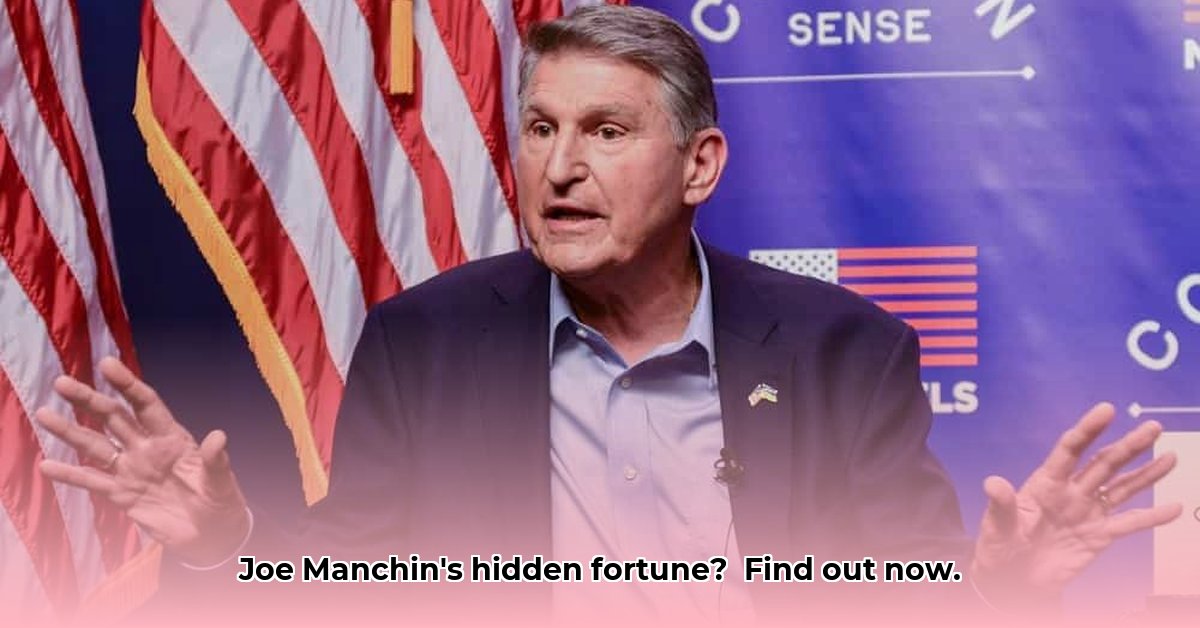
Unpacking Senator Manchin's Finances: A Complex Picture
Senator Joe Manchin, a key figure in the U.S. Senate, is known for his considerable wealth. However, pinpointing the exact figure is surprisingly challenging. Estimates vary wildly, ranging from a conservative $4.3 million to figures exceeding $14.6 million, depending on the source and interpretation of financial disclosures. This significant disparity highlights a critical issue: the limitations of current financial disclosure requirements for U.S. politicians. The lack of precise reporting, often allowing for broad ranges instead of specific numbers, makes a truly accurate assessment nearly impossible. This opacity, while not unique to Senator Manchin, raises concerns, particularly given his influence on legislation related to energy and finance. How can we effectively assess potential conflicts of interest without a clearer understanding of his financial holdings?
Where does Senator Manchin's wealth originate? His Senate salary, while substantial, comprises only a fraction of his overall net worth. His family's long-standing presence in West Virginia's business and political landscape undoubtedly contributed to his financial success. A major source of his income stemmed from his family's coal brokerage firm, Enersystems, which reportedly provided him with approximately half a million dollars annually in dividends. Beyond this, he likely holds a diverse investment portfolio—including significant holdings in major corporations such as Apple, Microsoft, Amazon, and Tesla—and a substantial real estate portfolio. The accumulation of these assets over time has clearly contributed to his considerable wealth. But how significantly does this financial background influence his political decisions and legislative votes? Doesn't this lack of financial transparency warrant scrutiny?
The Transparency Problem: A Threat to Public Trust
The wide discrepancies in reported figures for Senator Manchin's net worth highlight a serious deficiency in our system of financial oversight for public officials. This lack of transparency fuels concerns about potential conflicts of interest. How can the public confidently assess whether his investments influence his votes on energy policies, tax laws, or other consequential economic decisions without access to complete and accurate information? It's not about questioning his right to personal financial success, but about upholding ethical standards and ensuring the integrity of our government. How can we maintain public trust in a system where the financial interests of our elected officials remain largely opaque? Isn't this lack of clarity a fundamental breach of the public's right to know?
Conflicting Numbers, Similar Concerns: Navigating the Data Maze
Different sources, such as MoneyInc and Finbold, present varying estimates of Senator Manchin's net worth, reinforcing the challenge of obtaining a definitive figure. This isn't an issue of conflicting reporting but rather a direct result of existing reporting requirements (or the lack thereof). The vague nature of current disclosure rules makes independent verification incredibly difficult. Can a system that allows such opacity truly serve the public interest? The resulting public perception of our politicians is undeniably impacted by this lack of clear, verifiable information. How can we expect to maintain faith in a system where the accurate assessment of a Senator's wealth is virtually impossible?
The Path Forward: Toward Greater Transparency and Accountability
The discussion surrounding Senator Manchin’s wealth underscores a broader need for increased transparency in government. The challenge lies in finding a balance between an individual's right to privacy and the public's right to know about the financial interests of their elected officials. A collaborative approach is essential:
1. Strengthening Disclosure Requirements: Congress needs to revise its financial disclosure rules to mandate more detailed and specific reporting, closing loopholes that currently allow for ambiguity. This would increase the accountability of elected officials while minimizing undue intrusion into their personal affairs. Would more stringent regulations, including independent auditing of financial disclosures, enhance public trust?
2. Enhanced Enforcement Mechanisms: Even with stricter rules, enforcement is critical. Independent bodies should be empowered to investigate potential conflicts of interest, and penalties for violations should be substantial enough to deter misconduct. Would significantly greater penalties encourage compliance with financial disclosure laws?
3. Public Education and Engagement: The public needs to be informed about the importance of transparency in government. Civic organizations can play a key role in educating citizens about financial disclosure rules and empowering them to hold their elected officials accountable. Could increased media coverage and public awareness significantly improve transparency?
The current system lacks the necessary tools to effectively address this issue. By implementing these measures we can improve transparency, restore trust, and create a healthier political system. The need for reform is clear, and fostering greater ethical conduct in public service is paramount.